
What to Expect During the Procedure
Before your pelvic ultrasound, your healthcare provider will give you specific instructions on how to prepare. Typically, you will be asked to drink 24 to 32 ounces of water about one hour before the exam and refrain from urinating until after the procedure. A full bladder can create some discomfort, but it is essential for obtaining the best possible images. Some patients may feel increased urgency to urinate as the ultrasound progresses, but the procedure is generally quick and well-tolerated.
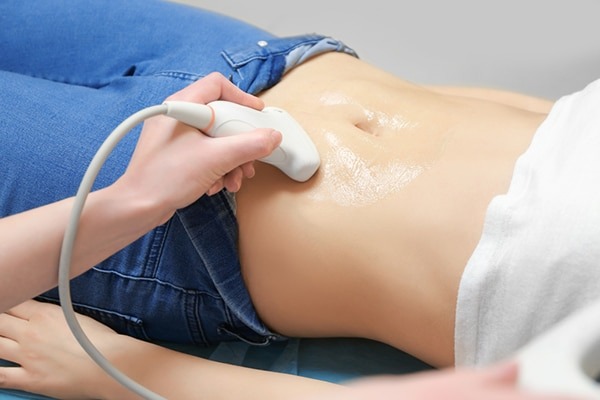
During the ultrasound, you will lie on an examination table while a technician applies a conductive gel to your lower abdomen. A transducer, or handheld probe, will then be moved across your skin to capture images of your pelvic organs. The procedure is painless, though you may feel some pressure due to your full bladder. The technician may ask you to hold your breath momentarily or adjust your position to get the best possible images.
In some cases, a transvaginal ultrasound may be performed after the transabdominal scan, especially if more detailed images are needed. For this portion, a small, lubricated probe is inserted into the vagina, allowing for closer examination of the uterus and ovaries. The transvaginal ultrasound provides high-resolution images and is often used when evaluating potential gynecological concerns, such as endometriosis, abnormal bleeding, or infertility issues.