Thyroid Ultrasound in Fairbanks, Alaska

570 Riverstone Way Unit 2 Fairbanks, AK 99709 Ph: 907-374-4644 Fax: 907-328-2202
Electronic Phone/Fax: 907-759-7118 Email: staff@fairbanksultrasound.com

A thyroid ultrasound is a painless, non-invasive imaging exam that uses sound waves to evaluate the size, shape, and internal structure of the thyroid gland — the small, butterfly-shaped gland at the base of your neck that regulates metabolism, energy, and hormone balance throughout the body. It’s the primary imaging tool used to investigate lumps, swelling, or abnormal lab results related to the thyroid. Fairbanks Ultrasound performs thyroid ultrasounds locally in Fairbanks, AK, with same-day walk-in availability for patients who arrive with a valid referral.

Thyroid conditions are common, and many people live with an undiagnosed nodule or mild enlargement for years before it’s noticed during a routine physical exam or blood test. A thyroid ultrasound gives your provider a clear, detailed picture of what’s happening inside the gland, which is often the deciding factor in whether further testing — such as a biopsy — is recommended.

How Does a Thyroid Ultrasound Work?

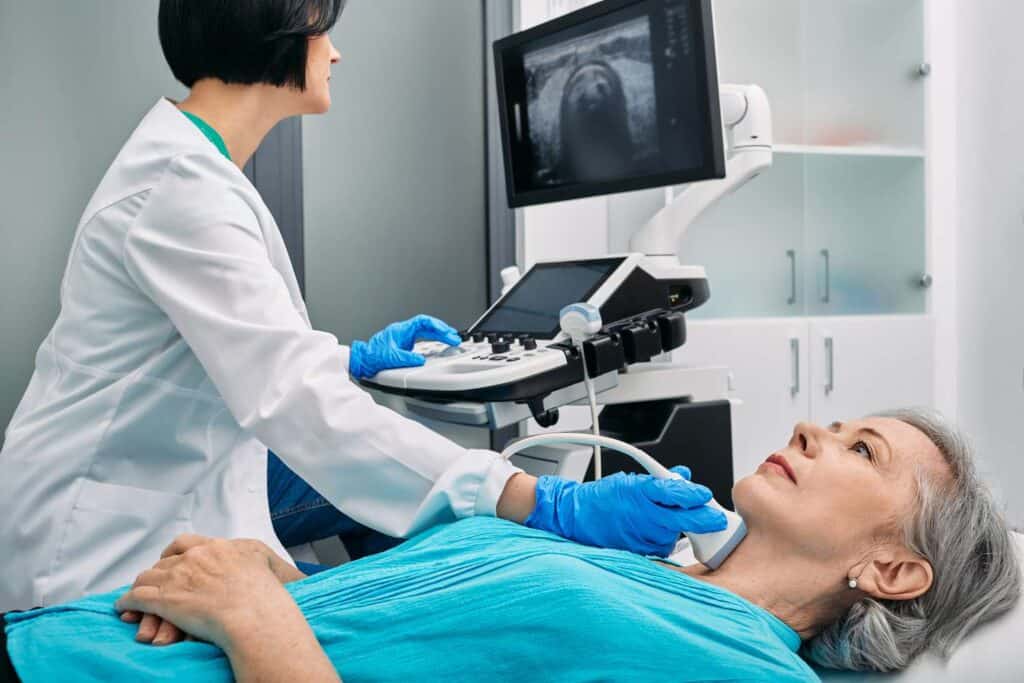
During the exam, your sonographer will apply a small amount of gel to the front of your neck and use a compact transducer to capture real-time images of the thyroid. Because the gland sits close to the skin’s surface, thyroid ultrasound produces exceptionally detailed images without the need for any specialized equipment beyond a standard high-frequency probe. Color Doppler technology may also be used to evaluate blood flow within the gland and any nodules that are found.

Get in touch with us!

What Does a Thyroid Ultrasound Detect?

A thyroid ultrasound can identify a variety of structural changes within the gland, including:

Thyroid Nodules

Nodules are extremely common — many adults have at least one, and the vast majority are benign. Ultrasound allows your radiologist to evaluate a nodule’s size, shape, borders, and internal characteristics, which helps determine whether it looks typical and low-risk or whether it has features that warrant a closer look, such as a fine-needle biopsy.

Goiter (Thyroid Enlargement)

An enlarged thyroid, or goiter, can result from a variety of causes, including iodine imbalance, autoimmune conditions, or overactive hormone production. Ultrasound provides precise measurements of the gland’s size that your provider can track over time.

Cysts

Thyroid cysts are fluid-filled areas that are typically benign. Ultrasound can distinguish a simple cyst from a more complex nodule that may need additional evaluation.

Thyroiditis (Inflammation)

Inflammation of the thyroid gland, often related to autoimmune conditions like Hashimoto’s thyroiditis, can change the gland’s texture and blood flow pattern in ways that are visible on ultrasound.

Blood Flow and Vascularity

Color Doppler imaging shows how blood moves through the thyroid and any nodules present. Increased blood flow can sometimes indicate inflammation or increased gland activity, and is one of several factors your radiologist considers when describing a nodule.

For a deeper look at how these findings appear on-screen and what they mean, see our related guides:

Why Would a Doctor Order a Thyroid Ultrasound?

Thyroid ultrasounds are commonly ordered for several reasons:

why would a doctor order a thyroid ultrasound

Thyroid Ultrasound vs. Blood Tests and Biopsy

Blood tests measure how much thyroid hormone your body is producing, but they can’t show what the gland itself looks like. Ultrasound fills that gap by giving your provider a direct, visual picture of the thyroid’s structure. If ultrasound identifies a nodule with features that warrant further investigation, your provider may recommend a fine-needle aspiration biopsy — often performed with ultrasound guidance to precisely target the area in question. Providers typically use blood tests, ultrasound, and biopsy together, each providing a different piece of the overall picture.

What to Expect During Your Exam

Your thyroid ultrasound takes place at our Fairbanks, Alaska imaging center and typically takes 15 to 20 minutes. You’ll be asked to lie back on the exam table with a small pillow supporting your shoulders so your neck is slightly extended. Your sonographer will apply gel to your neck and move the transducer across the area, occasionally asking you to swallow, which helps visualize the gland moving in relation to surrounding structures. No fasting, medication changes, or other special preparation is required for most thyroid exams.

Understanding Your Results

A board-certified radiologist reviews your images and prepares a detailed report describing the size of your thyroid, and the size, shape, and characteristics of any nodules found. This report is sent to your referring provider, who will discuss the findings with you and determine whether any follow-up — such as repeat imaging in six to twelve months, or a biopsy — is appropriate.

Why Choose Fairbanks Ultrasound

As a locally owned imaging center in Fairbanks, we offer the kind of quick access to thyroid imaging that can otherwise be hard to come by in Interior Alaska. Our sonographers perform thyroid exams regularly and understand how to capture the detailed images radiologists need to give you a clear, confident answer — without the wait times often associated with larger hospital systems.

Frequently Asked Questions

No. It’s completely painless and uses no radiation.

Most thyroid nodules are benign. Your radiologist will describe the nodule’s size and characteristics in your report, and your referring provider will determine whether any follow-up, such as a biopsy, is needed.

No special preparation, fasting, or medication changes are typically required.

Blood tests measure thyroid hormone levels; ultrasound shows the physical structure of the gland itself. Providers often use both together for a complete picture.

This depends on the nodule’s size and characteristics. Your provider will recommend a monitoring schedule based on your specific results, often ranging from six months to a year between follow-up scans.

Ultrasound can identify features that raise or lower the likelihood of cancer, but a definitive diagnosis typically requires a biopsy. Most nodules identified on ultrasound turn out to be benign.

Schedule your thyroid ultrasound in Fairbanks, Alaska today. Call (907) 374-4644 or book online.